
defaultLogLevel | Specifies which types of application logs display in Dev Center, based on priority level. Possible values mirror Apache’s log4net: All, Debug, Info, Warn, Error, Fatal, and Off. When deploying an API Extensions application to production, set this value to Error to avoid performance penalties. |
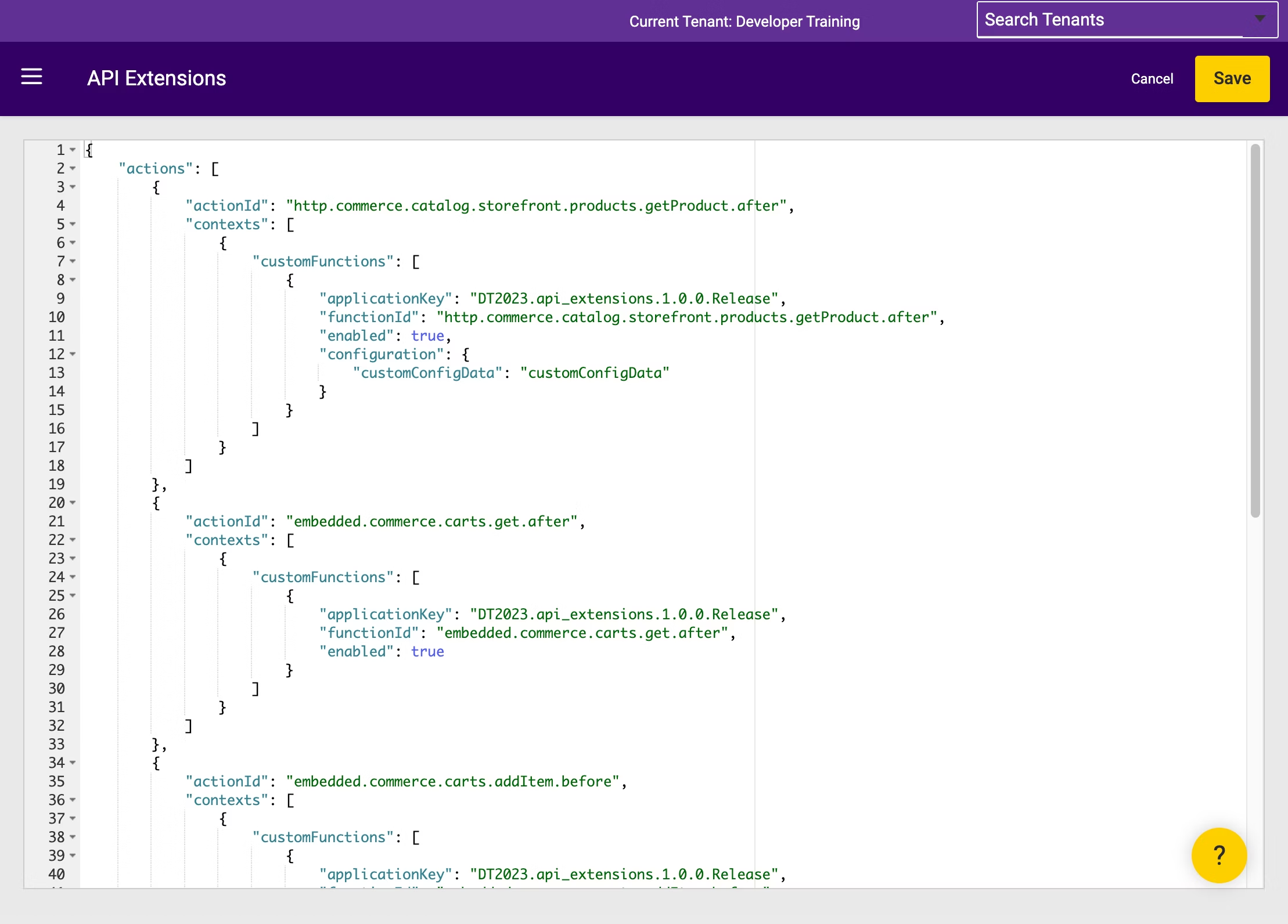
| actions | An array of actions. |
actionId | Identifies a specific action. This ID matches the naming conventions in the assets/functions.json file. |
| actions[ contexts ] | The per-site settings that apply to an individual action. |
context | (Optional) The siteId for the site you want to apply the nested settings to. You can omit this field if you want to apply the same settings to an action across all your sites. |
| actions[ contexts[ customFunctions ] ] | An array of custom functions tied to an action. Some actions can run only one function, but other functions can run multiple functions. |
applicationKey | The application key of the API Extensions application. |
functionId | The name of the custom function tied to the action, per the naming conventions set in the manifest files located in the assets/src directory. |
enabled | (Optional) A Boolean that controls whether the function is enabled or disabled. The default is true. |
timeoutMilliseconds | (Optional) The number of milliseconds the function is allowed to run before the platform terminates it. The default is 5000 milliseconds. The maximum allowed value is 25000 milliseconds — this is the platform’s hard execution ceiling. Setting this to 25000 does not make a slow action faster; it only extends the window during which a slow action can block the storefront. For storefront HTTP actions on high-traffic pages, set this to the smallest value that accommodates the action’s expected external call latency plus overhead, not the maximum. See Calling External APIs Safely for guidance on budgeting time across outbound calls. |
exceptionBehavior | (Optional) The behavior to take when an unhandled error is encountered, either fault or continue. The default is fault.
fault propagates the error to the end-user request, which can return an error response to the shopper. continue swallows the error and lets the request proceed as if the action had not run. Use continue for non-critical enrichment actions where storefront availability is more important than extension correctness. Use fault for before actions where the extension output is required for the request to proceed correctly. |
logLevel | (Optional) Specifies which types of function-specific logs display in Dev Center, based on priority level. Possible values mirror Apache’s log4net: All, Debug, Info, Warn, Error, Fatal, and Off. When deploying an API Extensions application to production, set this value to Error to avoid performance penalties. |
| actions[ contexts[ customFunctions[ configuration ] ] ] | Custom function-level settings that you can create. If you create custom settings with the same names as custom settings created at the application level, these settings take precedence over the application-level configurations. |
yourCustomField | Custom object data. |
| configurations | Custom settings that apply to all actions in the API Extensions application. |
applicationKey | The application key of the API Extensions application. |
| configurations[ configuration ] | Custom application-level settings that you can create. If you create custom settings with the same names as custom settings created at the function level, these settings are overwritten by the function-level configurations. |
yourCustomField | Custom object data. |